


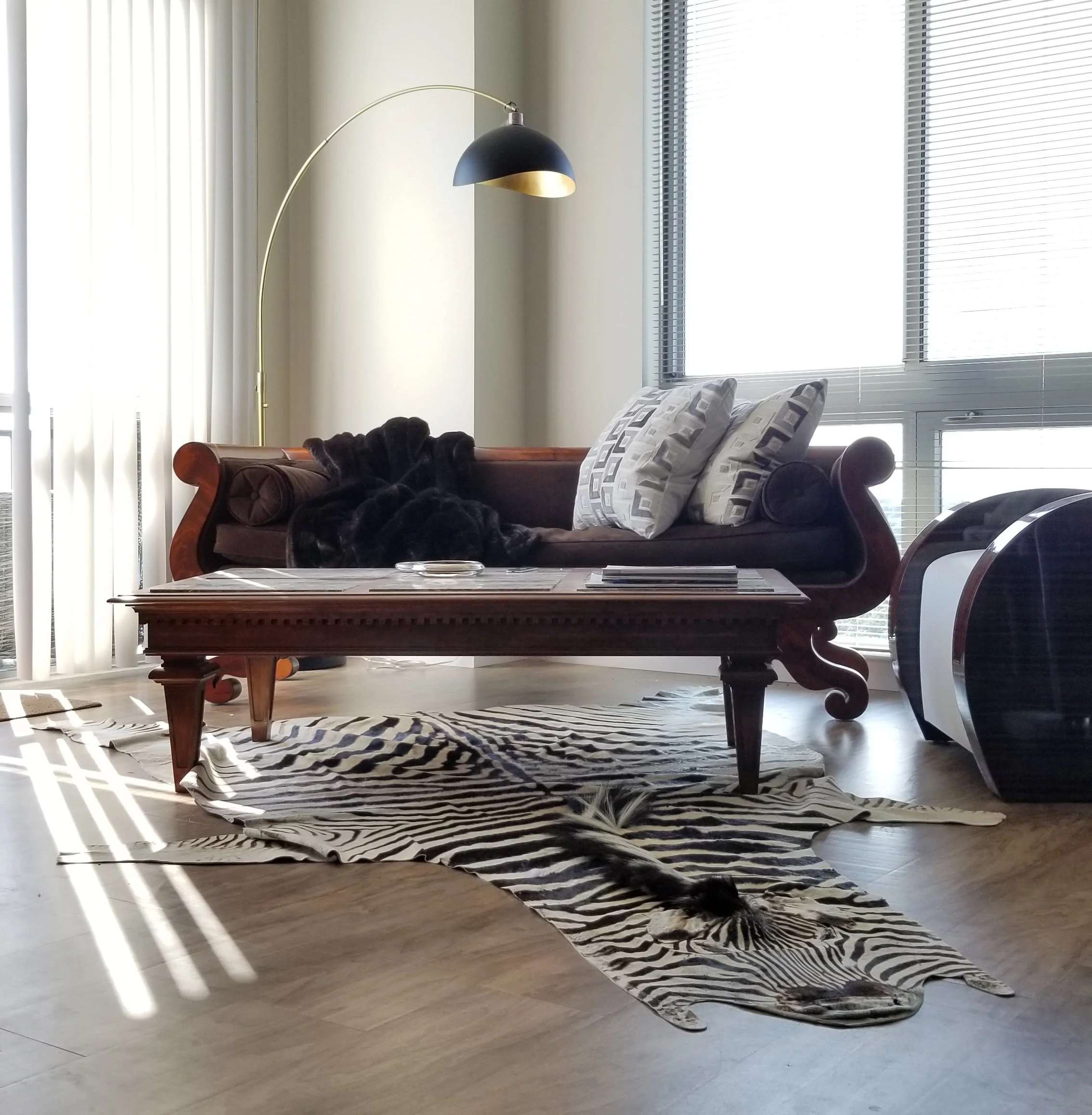
Exceptional American Late Empire Crotch Mahogany Sofa, circa 1835, in flame mahogany with chocolate suede upholstery. Excellent condition.
Period and Styling
Your sofa is classic American Empire style (frequently referred to as Classical Revival or Late Empire), dating to circa 1830–1845.
The design is heavily inspired by Greek and Roman daybeds (klisnoi). You can clearly identify the hallmark features of the American Classical period in your piece:
The Silhouette: A "Grecian" or scroll-arm sofa profile featuring a continuous, structural frame where the arms gracefully curve outward into dramatic volutes.
The Feet: Heavy, prominent ogee bracket scroll feet supporting a thick, low-slung, unornamented plinth base.
The Biedermeier Connection: The Biedermeier period correctly hints at the aesthetic. The German Biedermeier movement and American Late Empire coexisted and shared this exact ethos: a shift away from the delicate, gilded, or brass-inlaid French Empire styles of the 1810s toward massive, architectural forms that relied purely on expansive, highly figured wood veneers for decorative impact.
Wood Identification
The sofa is constructed using high-quality Mahogany, specifically featuring premium crotch mahogany veneers over a primary wood frame (typically pine, poplar, or maple).
As visible in the overhead close-up, the wood exhibits a spectacular "flame" pattern. This effect was achieved by slicing the wood where a large branch met the main trunk of the mahogany tree. The rich, fiery grain configuration is highly characteristic of premium American furniture shops from the 1830s in major cabinetmaking hubs like New York, Philadelphia, or Boston.
Your family provenance placing it in your possession since at least the early 1900s matches its timeline perfectly, as it would have been an established antique family heirloom by that time. It functions beautifully as a dramatic, historic anchor in a contemporary space.
Condition and Dimensions
Dimensions: At 7 feet long and 24 inches deep, these substantial proportions are standard for a formal parlor sofa of this era. It was designed to anchor a room as a statement piece.
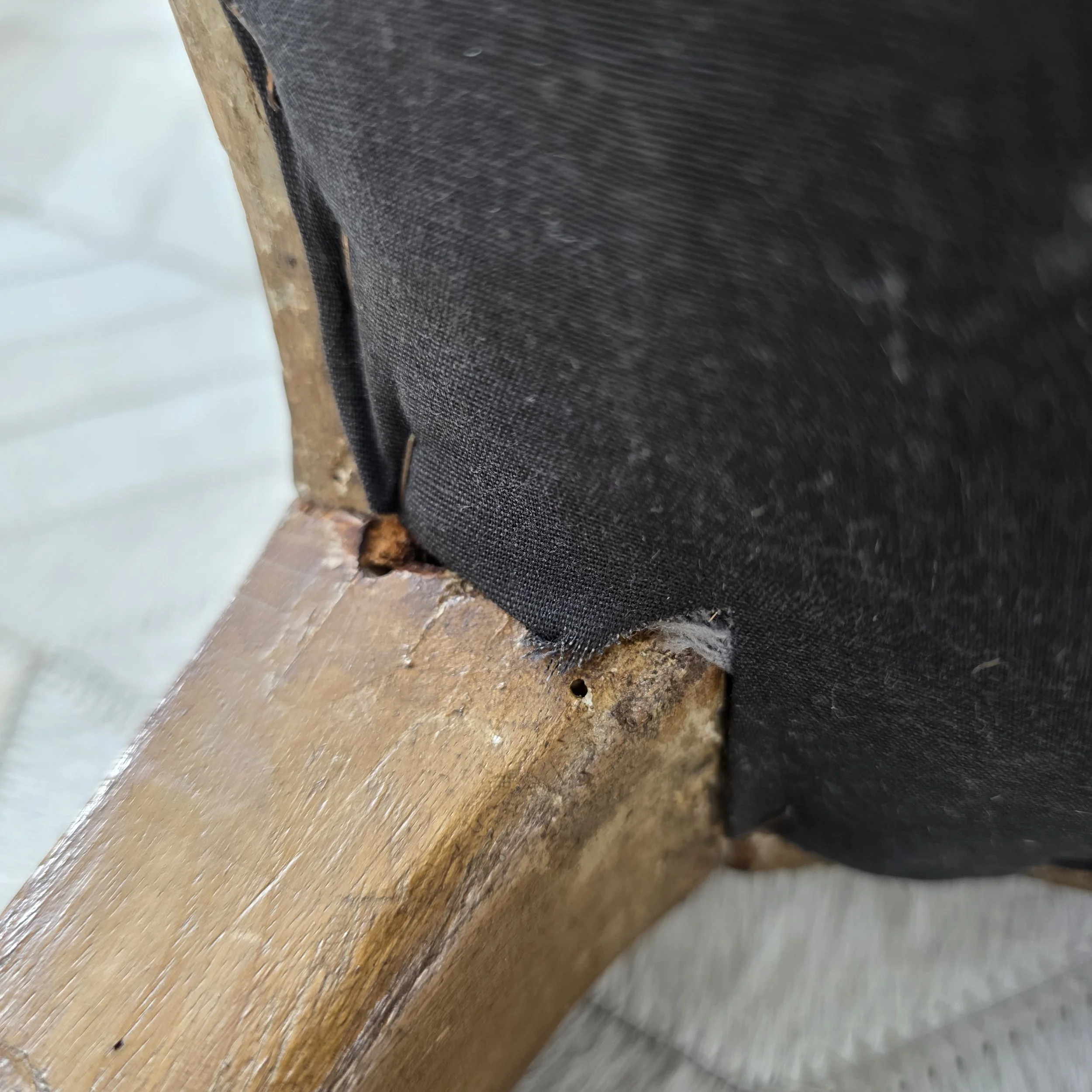
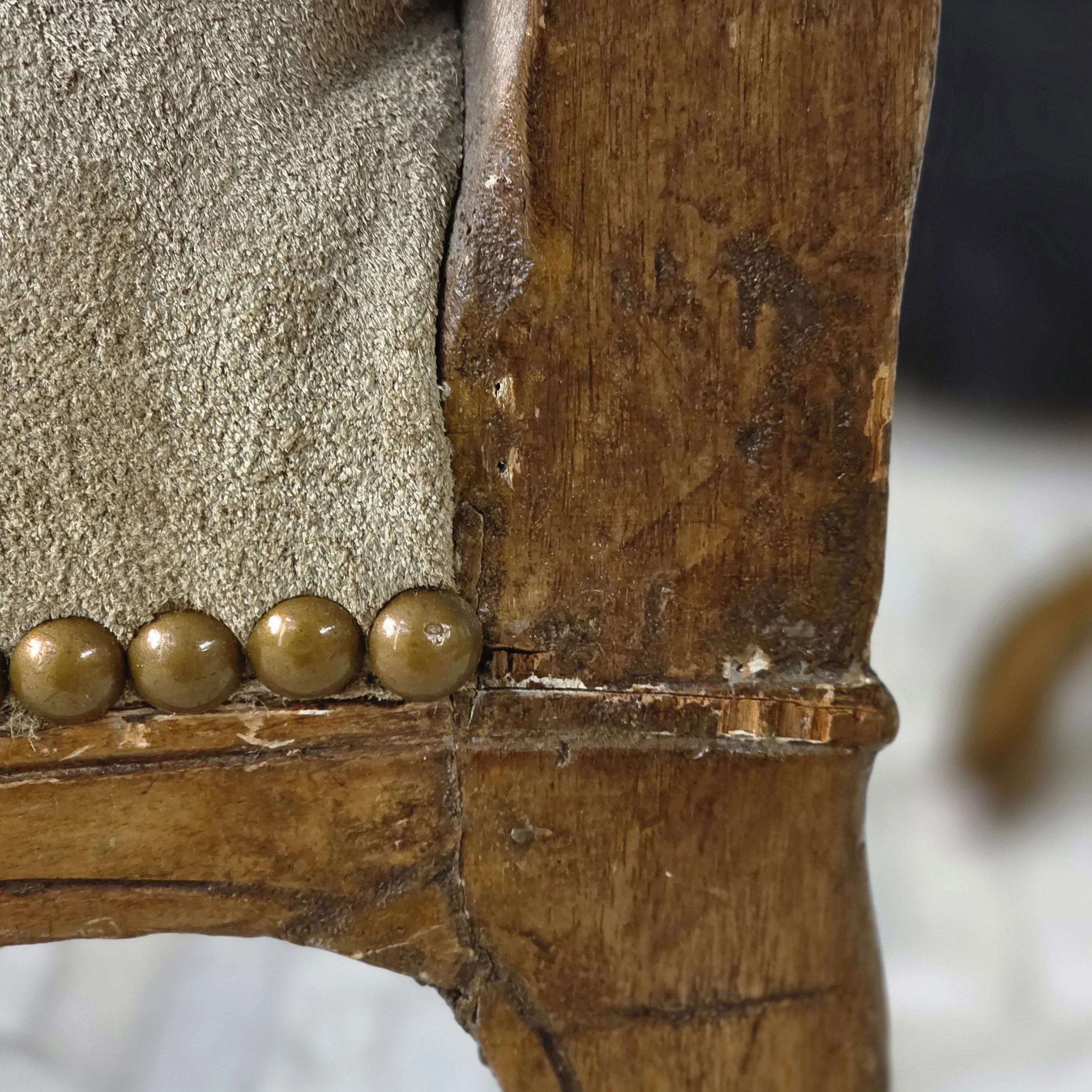
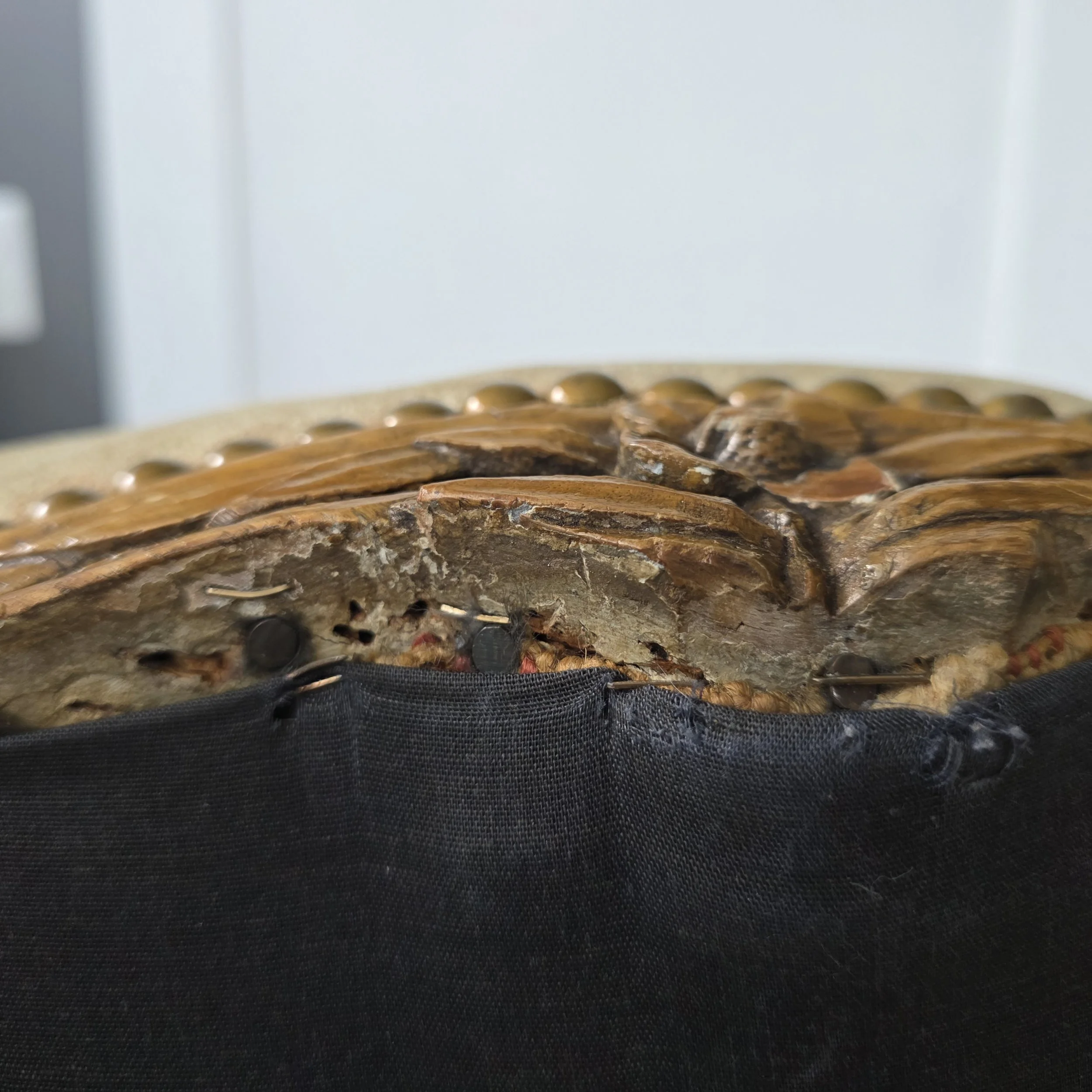
Condition: Excellent condition is highly beneficial to its value. A single minor nick on a piece nearly two centuries old is completely negligible. The veneer appears remarkably intact, tight, and free of the extensive checking, lifting, or patch-repair often found on large Empire surfaces. The finish retains a beautiful, deep luster that highlights the flame grain. The contemporary brown velvet or suede upholstery and matching bolster pillows are crisp and clean.
The sofa belongs specifically to the Late Empire (or Classical Revival) period rather than the Early Empire period.
The distinction comes down to the design philosophy of the two eras:
Early American Empire (c. 1815–1825): Heavily influenced by French design, pieces from this earlier window are typically lighter in scale. They rely heavily on elaborate brass or gilt-wood mounts, intricate stenciled decoration, and intensely carved details—like animal paw feet, eagle wings, or cornucopias.
Late American Empire (c. 1830–1845): This is where your sofa fits perfectly. By this time, the style had shifted away from applied brass and heavy carving toward massive, bold, architectural silhouettes. Instead of ornate decorations, cabinetmakers relied almost entirely on large, smooth expanses of highly figured crotch mahogany veneer to provide the visual drama.
Your sofa's clean, sweeping "Grecian" scroll arms and heavy, unornamented ogee bracket feet are textbook examples of this later, more minimalist phase of the American Classical movement.