

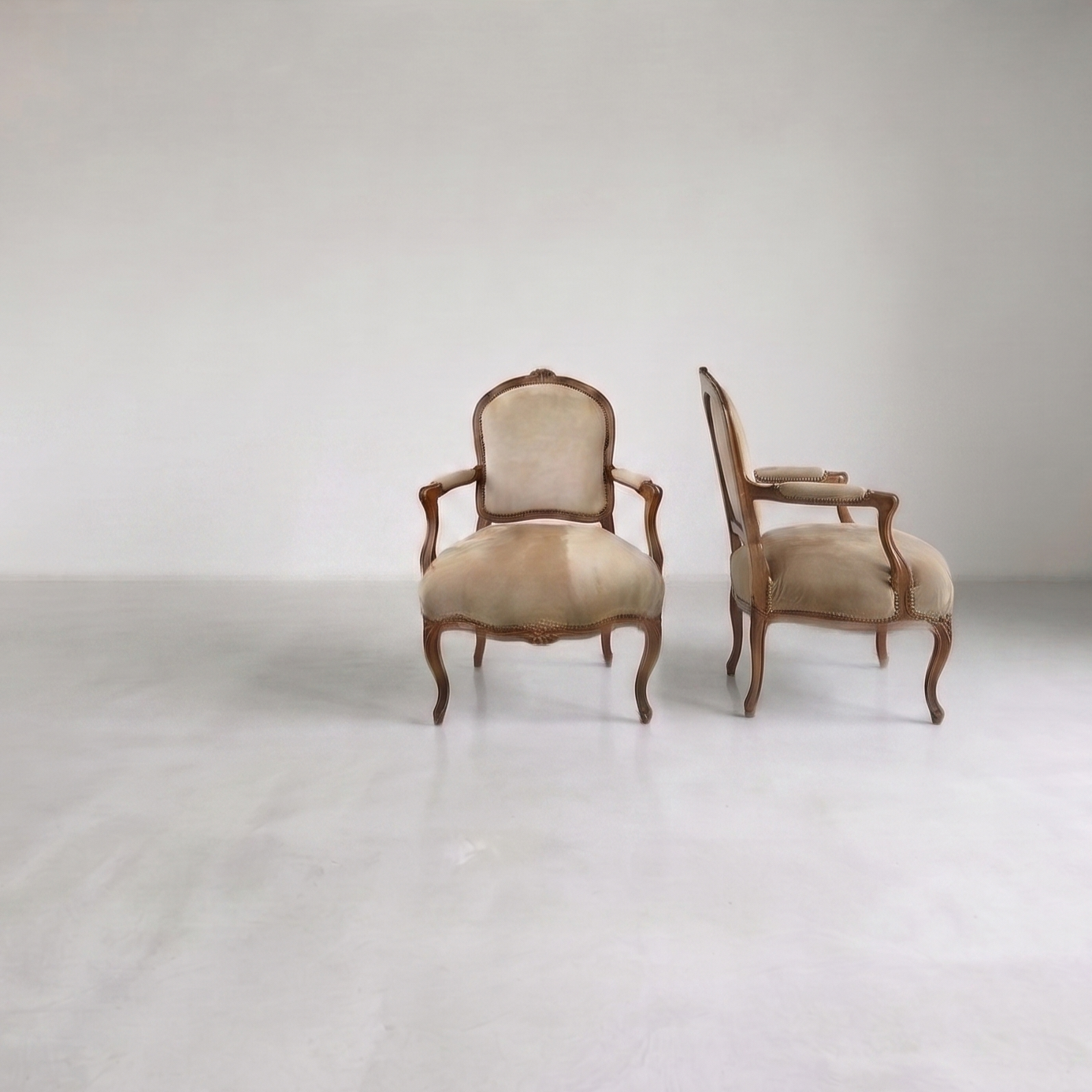
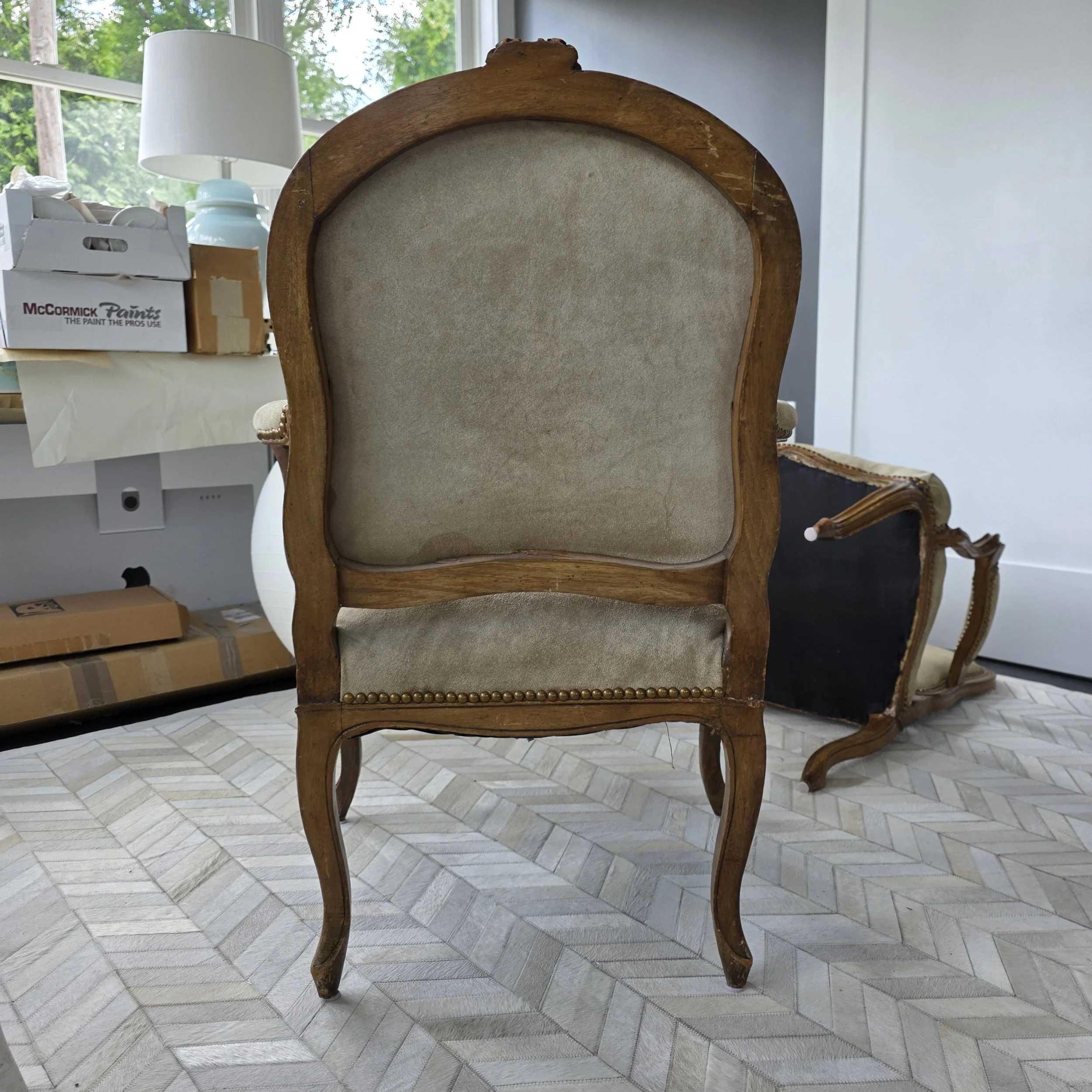
These chairs are authentic French Louis XV style revival armchairs (fauteuils à la reine), circa 1860–1880 in walnut or beechwood
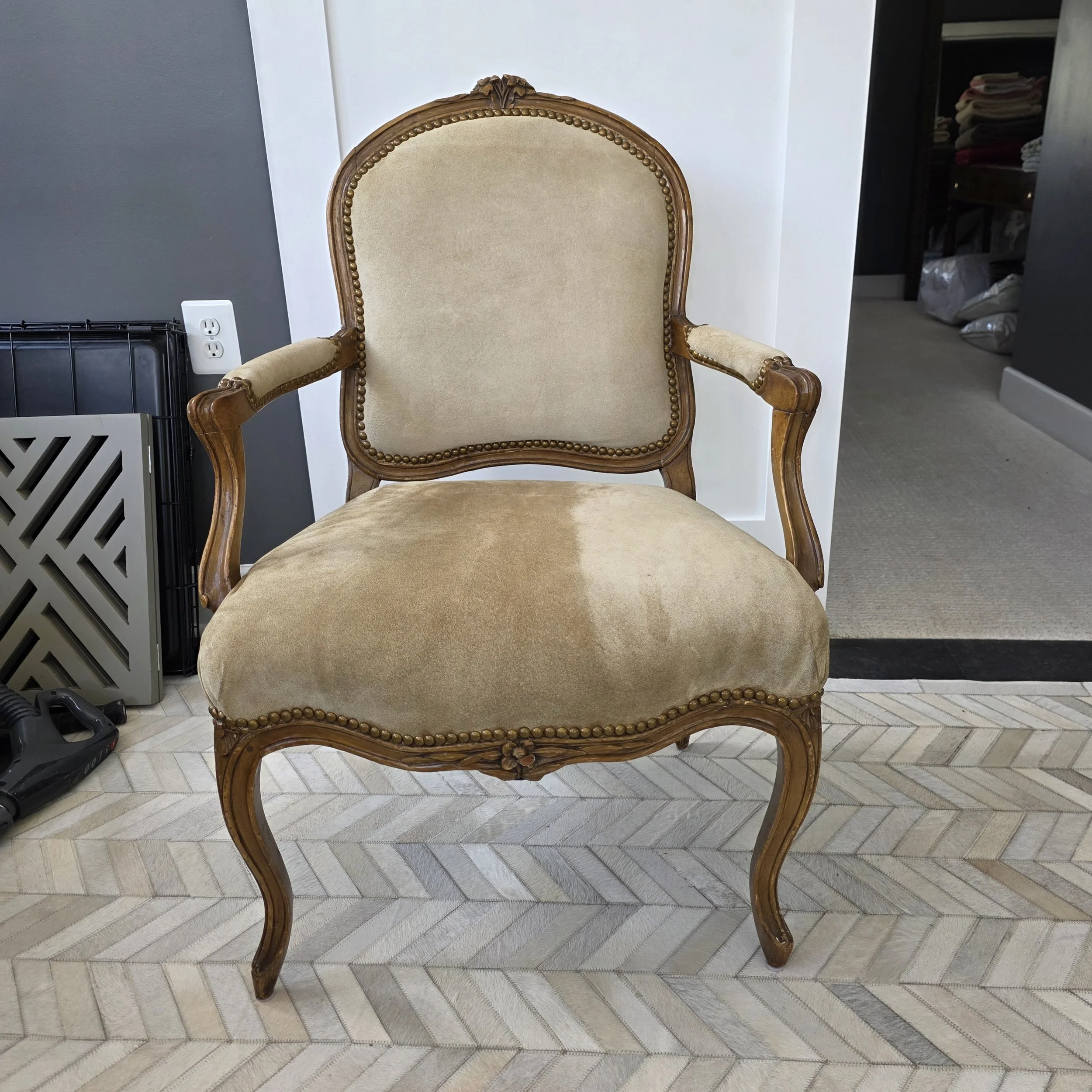
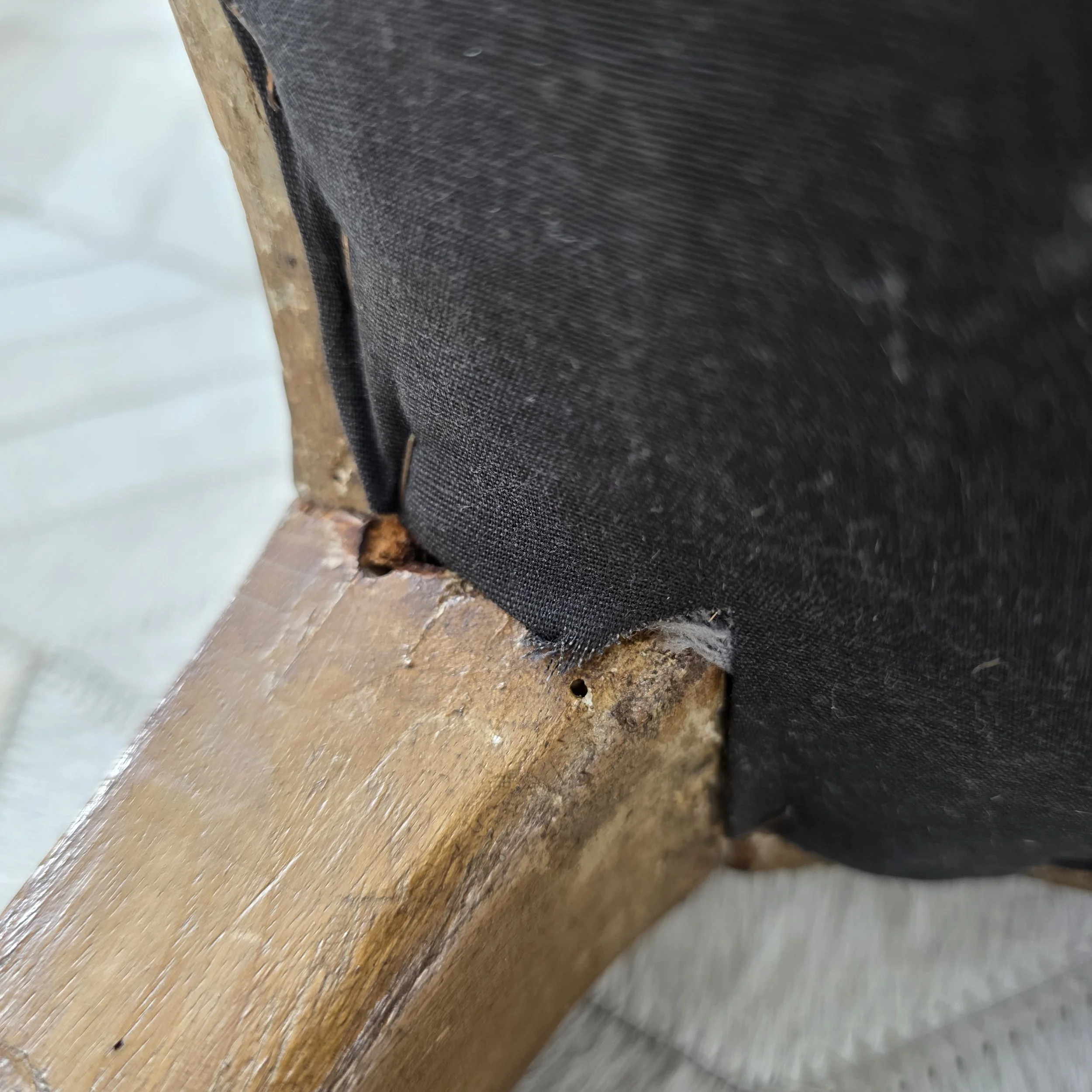
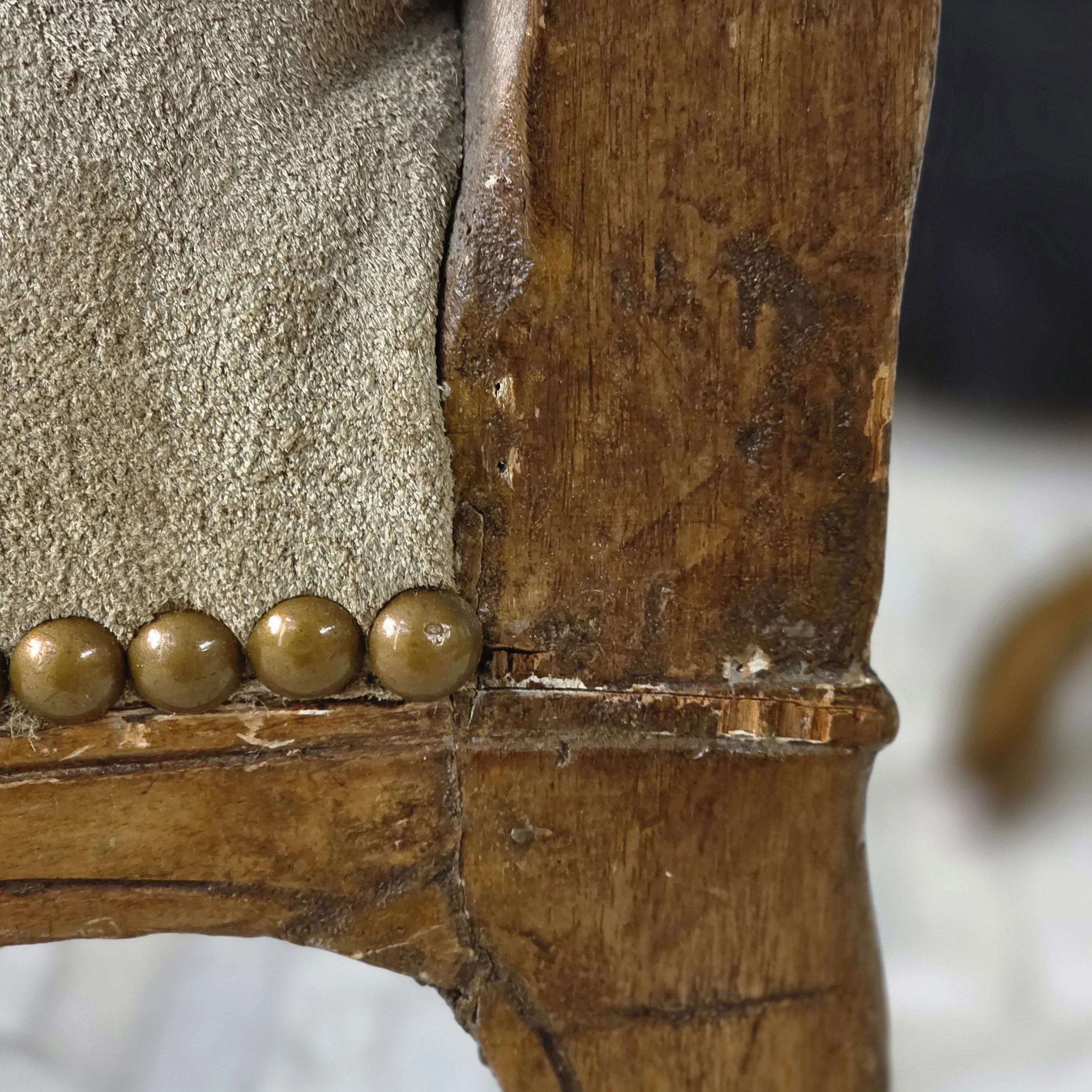
Thank you for providing these highly detailed images. They provide an incredibly clear diagnostic look into the history, construction, and authenticity of your chairs.
Having been purchased from a reputable New Canaan, Connecticut antique shop in the early 1990s as "old," they absolutely live up to that description.
Here is the professional evaluation based on the visual evidence from the provided files.
Period and Dating
These chairs are authentic French Louis XV style revival armchairs (fauteuils à la reine), dating to circa 1860–1880 (the Napoleon III era in France or late Victorian era in America/UK).
How to Decode the Visual Evidence:
The Wood and Ageing: In image 20260528_161415.jpg and 20260528_161513.jpg, we see a beautifully oxidized, close-grained wood—most likely French Walnut or Beechwood. The deep, natural accumulation of grime, wax, and wear in the recessed crevices of the hand-carved details indicates well over a century of existence.
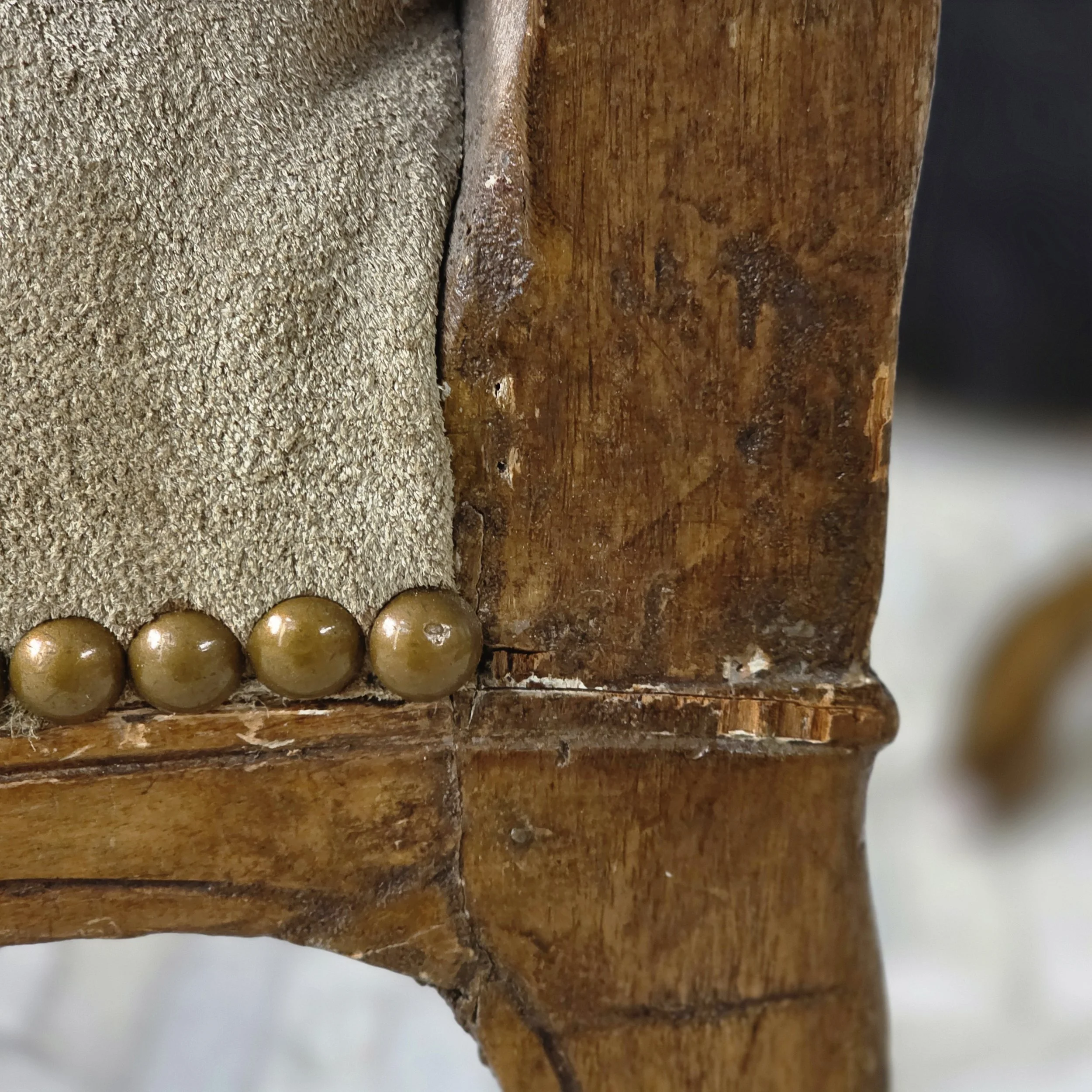
The Joinery: Image 20260528_161513.jpg reveals a classic mortise-and-tenon joint connecting the seat rail to the leg. The slight separation showing the old hide-glue line is exactly what we look for in 19th-century construction. It shows a tight, handmade fit without modern mechanical fasteners.
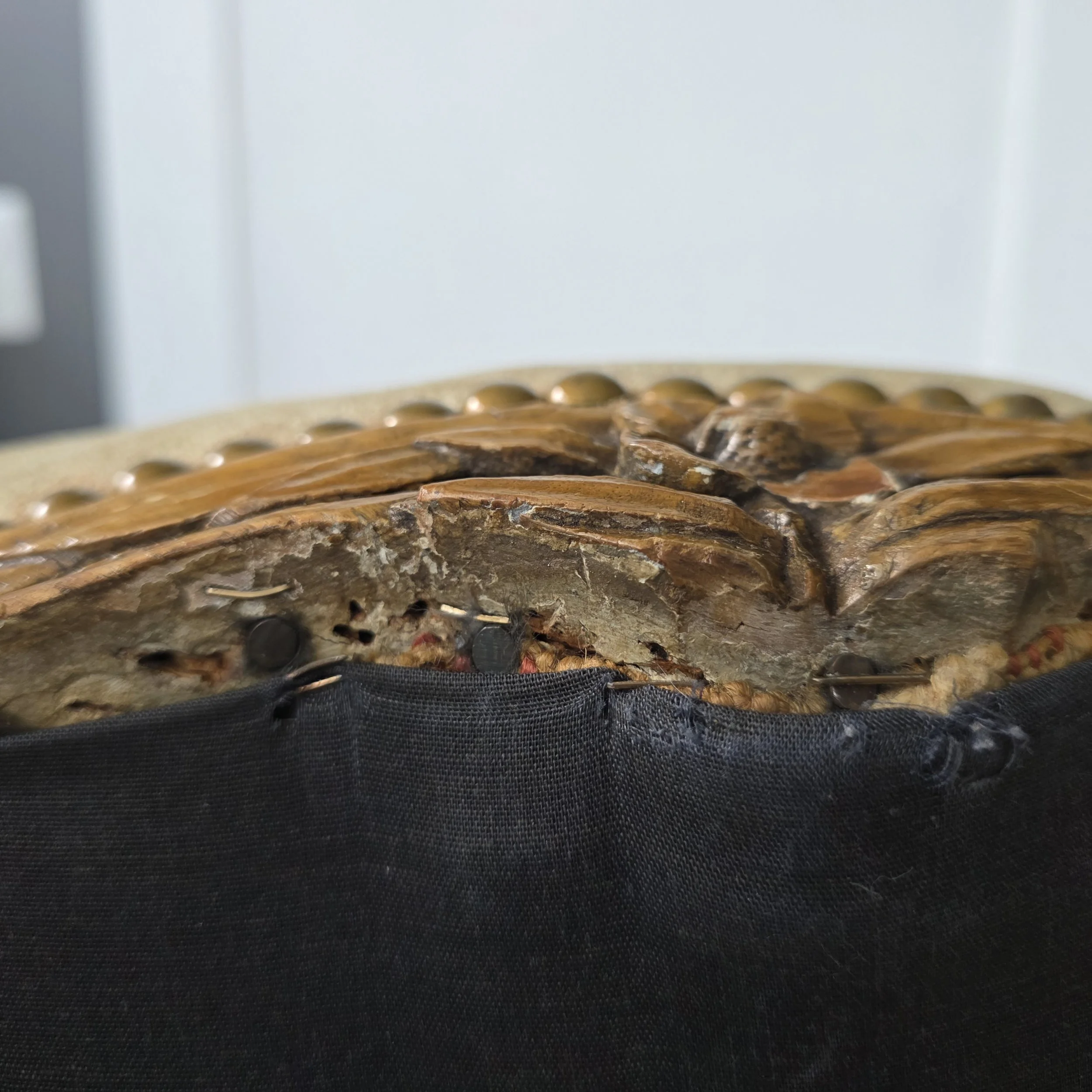
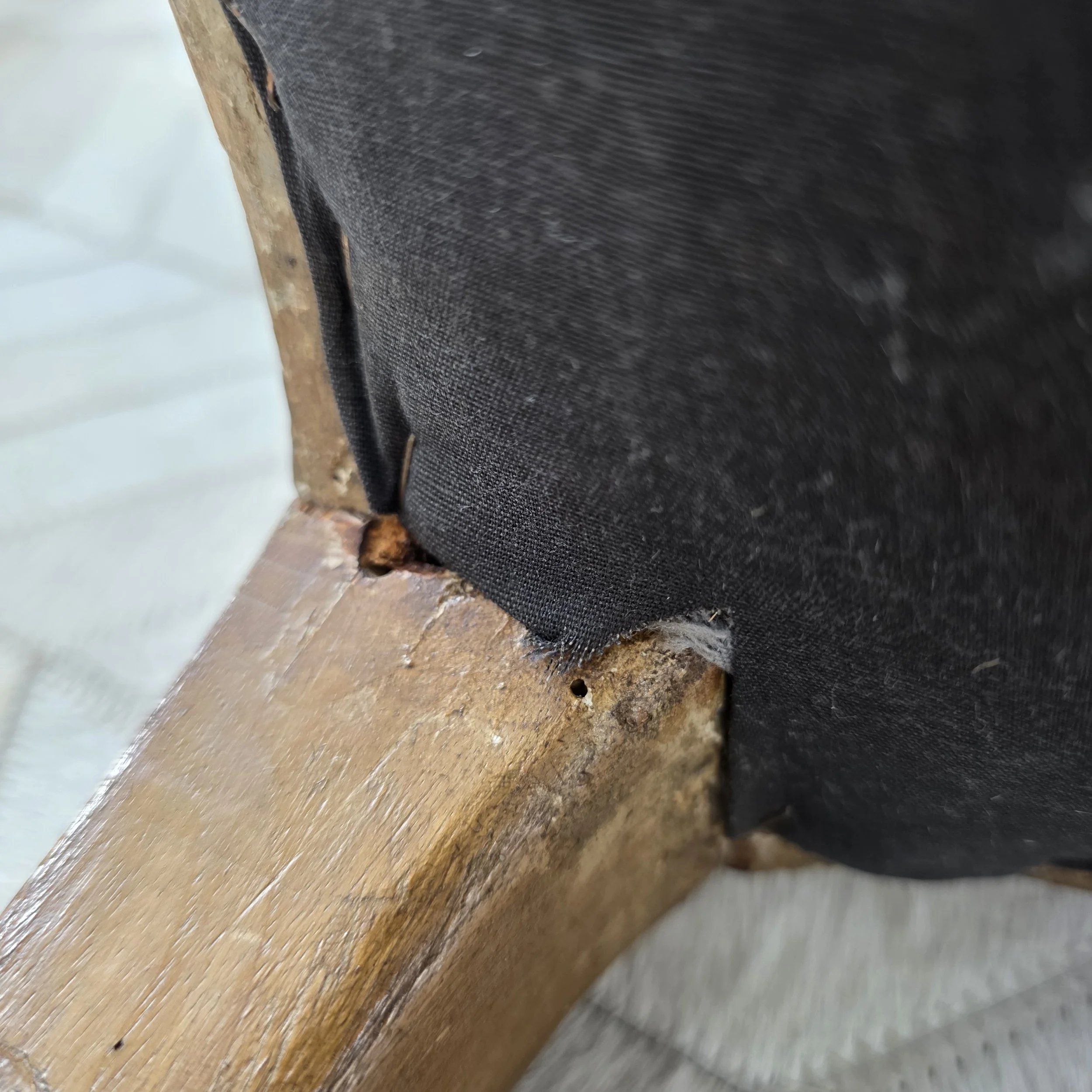
The Tool Marks: If you look closely at the raw underside of the frame in image 20260528_161247.jpg and 20260528_161540.jpg, the wood surface is slightly irregular and rough. This shows it was shaped using manual hand-tools rather than the perfectly uniform, smooth plane of a 20th-century factory saw.
Why they are 19th-Century Revival rather than 18th-Century Originals:
During the mid-to-late 1800s, there was a massive, high-end resurgence of interest in 18th-century court styles. Your chairs possess the slightly more robust structural proportions, crisp carving style, and uniform symmetry typical of elite 19th-century workshop revivals, rather than the slightly more relaxed, highly organic asymmetry found on pieces carved in the 1750s.
The construction methods hidden beneath the fabric of a chair act like a time capsule. Because upholstery techniques evolved rapidly alongside industrial manufacturing in the 19th century, the specific types of webbing, springs, and fasteners used tell a definitive story about when a piece was made.
Here is exactly why those internal components matter so much to an authenticator:
1. The Timeline of the Coil Spring (The Great Divider)
Before the 1830s, furniture seats were flat or gently domed, stuffed tightly with animal hair and supported entirely by webbing.
Pre-1830: If a chair frame shows absolutely no evidence or structural depth for coil springs, it is a strong indicator of an 18th-century or early 19th-century origin.
Post-1830: Heavy iron coil springs were patented for furniture in the late 1820s and became the industry standard by the 1840s and 1850s. Your chairs feature deep seat rails specifically designed to house these tall, hand-tied iron springs to give the seat its deep, comfortable bounce. This structural requirement immediately aligns the frame construction with the mid-to-late 19th century.
2. Hand-Tied Jute Webbing vs. Modern Supports
The "orange pieces" you can feel underneath your chairs are made of jute, a natural plant fiber.
The Historic Method: In the 19th century, thick straps of jute webbing were woven into a tight interlaced grid across the bottom of the frame to create a platform. The iron coil springs were then set on top of this grid and meticulously tied together by hand using twine in a four-way or eight-way knot pattern.
The Modern Method: By the mid-20th century, natural jute was largely replaced by synthetic rubber webbing, elastic straps, or flat, zigzag steel "no-sag" springs. Finding thick, heavy natural jute webbing indicates traditional, high-quality craft consistent with historic production.
3. Tacks vs. Staples (The Evolutionary Paper Trail)
The fasteners used to attach the webbing and fabric to the wood frame provide an incredibly clear timeline of any intervention the chair has experienced.
Fastener TypeHistorical EraWhat It Tells An AuthenticatorHand-Forged TacksPre-1830sIrregular, square-shanked, and blackened. Indicates early, undisturbed original upholstery.Machine-Cut Iron Tacks1830s–1950sUniform, flat heads with a oxidized, rusted patina (like the old nails visible on your frame). Confirms 19th or early 20th-century work.Pneumatic Staples1950s–PresentFine-wire, bright steel or brass staples (like the one that fell out of your chair). Proves the piece underwent a modern restoration or reupholstery.
The Layered Truth
When an authenticator looks at a chair, they look for a "layering" of these histories. In the case of your chairs, finding a framework of 19th-century hand-cut iron tacks and traditional jute-and-spring architecture—overlaid with modern pneumatic staples—tells the exact story of an authentic 19th-century antique frame that was given a top-tier, structurally sound restoration in the late 20th century.
The Upholstery & The Staple Riddle
The underside elements offer a fascinating look at the chairs' maintenance timeline:
The Layered Fasteners: In image 20260528_161247.jpg, you can see large, flat-headed, oxidized iron upholstery tacks embedded deep in the wood. These are old, likely original to the 19th century or a very early 20th-century reupholstery job.
The "Staple": Image 20260528_161540.jpg shows modern fine-wire staples holding the black dust cover in place.
The Verdict on Condition: Your chairs have been professionally stripped down and completely rebuilt from the frame up—most likely right before you purchased them in the early 1990s. The restorer kept the traditional, high-quality core components (the heavy iron coil springs and sturdy orange jute webbing you can feel), but used modern pneumatic staple guns to tightly secure the new fabric layers and the contemporary suede upholstery. This is standard practice and keeps the chairs incredibly sturdy, comfortable, and functional for daily use.
Based on the visual evidence, the restoration did not include completely stripping the original finish down to the bare wood. Instead, the wood frame retains its historic, layered surface.
Here is how we can tell from the details in your images:
Preserved Crevice Patina: In image 20260528_161415.jpg, you can see a dark, heavy accumulation of old wax, dirt, and oxidized finish tucked deep inside the valleys of the carved floral details. If a restorer had chemically stripped the chair, those recessed areas would be completely clean, light, and uniform with the rest of the wood.
Layered Color Variation: In image 20260528_161513.jpg, the flat surfaces show natural clear coat degradation, minor abrasions, and superficial scuffs that only happen over decades of use. A total stripping process erases these micro-scratches and resets the wood to a perfectly even color.
What the Restorer Likely Did: Rather than stripping, the restorer practice a much more conservative (and value-preserving) method. They likely gave the frame a thorough cleaning with a mild solvent to remove surface grime without disturbing the underlying history, and then applied a fresh coat of paste wax or a light padding of shellac to revive the luster and protect the wood.
By leaving the original 19th-century finish intact, the dealer preserved the authentic "skin" and character of the antique, which is exactly what you want to see.